Dental Diastema: Close It or Flaunt It? The Medical Truth About "Separated Teeth"
The gap between the front teeth has become a kind of personal signature for celebrities, models, and singers. For years, fashion magazines and social media have romanticized the dental diastema, treating it as a mere aesthetic trait that gives "personality" to a smile.
But as a dental health specialist, my perspective is very different from that of a fashion magazine.
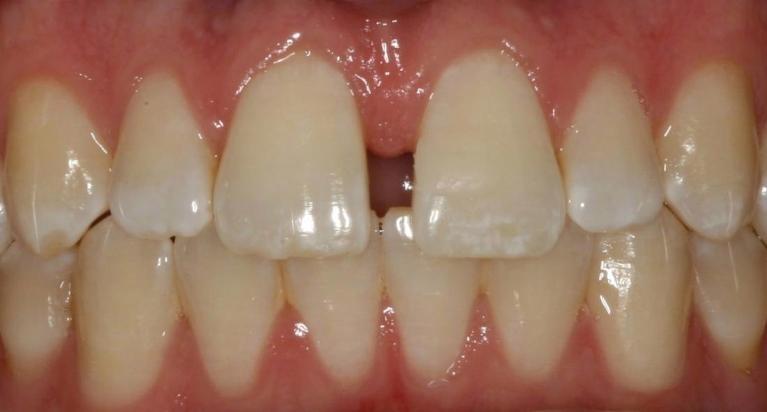
Many patients come to my practice in Guadalajara asking: "Dr. Alejandra, what happens if I leave my teeth apart? Is it bad?" And if they decide to close it, they almost always look for the path that seems easiest: "Can you fill the gap with resin today?"
The medical reality goes far beyond what you see in the mirror. Today I'm going to explain the physics behind your smile and why that seemingly harmless space could be costing you the health of your gums and bones.
Is it bad to have separated teeth, or is it just an aesthetic issue?
It is not just an aesthetic issue; having separated teeth (diastema) is a risk for your long-term periodontal health. Although at first glance it may seem harmless, that interdental space alters the distribution of forces when chewing and facilitates severe plaque accumulation, compromising the stability of your entire mouth.
"In fact, I am always very honest with my patients: I prefer to close diastemas with orthodontic treatments. Not so much for aesthetics (although they don't look good), but for periodontal health."
When teeth don't have a firm contact point with each other, they lose their mutual support. It's like removing a brick from a stone arch; eventually, the others begin to give way under the pressure.
The invisible consequences of an untreated diastema
Leaving an open diastema without clinical medical evaluation is playing Russian roulette with the longevity of your natural teeth. This is what happens beneath the surface.
Rotations and proclinations (uncontrolled movements)
Los dientes están diseñados para apoyarse unos contra otros. Cuando existe un espacio libre, el cuerpo humano, por naturaleza, intenta cerrarlo.
As I always explain to those I evaluate at AM Dental Studio: spaces generate uncontrolled movements, rotations, and proclinations that are not healthy for the supporting tissues. Lacking a firm natural stop, your teeth can start to rotate on their own axis or progressively tilt forward (proclination) seeking that point of contact. This instability completely alters the balance of your bite, causing incorrect contacts when chewing that translate into irreversible premature wear on the enamel.
Furthermore, this biomechanical alteration subjects the roots to stresses for which they were not designed, gradually weakening their anchorage within the jawbone.
Damage to supporting tissues (bone and gum)
The open interdental space is a magnet for food retention. Every time you eat, debris impacts directly against the papilla (the gum between the teeth). Over time, this constant impact inflames the gum, causes chronic bleeding, and, in advanced stages, bone resorption. If you lose bone, the tooth becomes mobile.
That chronic inflammatory condition is the prelude to pyorrhea or periodontal disease, the silent enemy that attacks first the gum and then the bone.
The myth of the quick fix: why filling the gap with resin or veneers isn't always a good idea
We live in the age of immediacy. When a patient decides to close their diastema, they often come asking us to fill it with resin or place veneers in a single afternoon.
Simply filling a wide space by adding material to the sides of the teeth creates what in clinical practice we call "gum teeth": square, disproportionate, and excessively wide teeth. Furthermore, if the base of the tooth is rotated, a veneer will only be an aesthetic patch on a serious functional problem.
Does that mean resin is never an option? No: when properly indicated, a hand-crafted resin veneer can be conservative and elegant for small spaces. And when the case calls for it, porcelain veneers offer natural and long-lasting results. The key is not the material: it's the plan behind it.
A true smile design evaluates the complete architecture of your mouth, the proportion of your teeth, and the health of your gums before placing any restorative material. That's how we work in our aesthetic dentistry team in Guadalajara: diagnosis first, material later.
"It's super important that in the first appointment, treatments like veneers are ruled out if they're not suitable. We need to look for what really suits the patient and what's most conservative for their teeth."
Orthodontics: the ethical, safe, and definitive way to close gaps
If your diastema exceeds 1.5 millimeters, orthodontic treatment (whether with conventional braces or invisible aligners like Invisalign) is the gold standard.
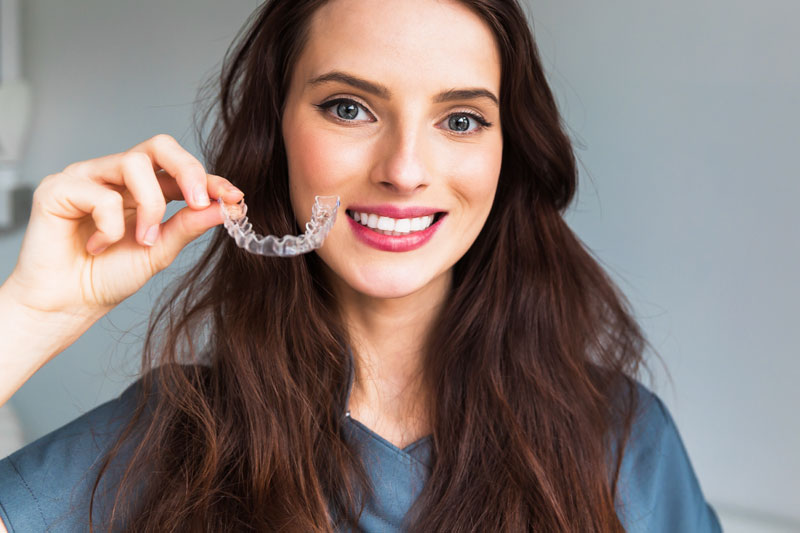
Orthodontics is the only method that attacks the root of the problem. Instead of masking the gap by widening the teeth, we gently move the roots through the bone to their ideal position. This restores the natural point of contact, protects your gums, and aligns your bite so it works like a perfect gear.
Which treatment is best for you? The value of an honest diagnosis
Every mouth is a universe of biomechanics. If your diastema is very small (less than 1 mm) and your bite is perfect, perhaps a very conservative injected resin might be viable. But if there are rotations, periodontal problems, or wide spaces, orthodontics will be your best ally.
Don't make decisions based on social media trends or promises of "perfect smiles in 24 hours." Responsible dentistry always prioritizes maintaining the integrity of your natural teeth.
Frequently Asked Questions About Closing Diastemas
If the space retains food or destabilizes your bite, you could suffer from inflamed gums, bone loss, and dental mobility in the long term.
It depends on the gap and the technique, but many mild to moderate diastemas show significant results between 4 and 8 months of treatment.
If the gap is large, resin creates disproportionately wide teeth and steps where tartar accumulates.
It can be: genetics influence tooth and jaw size. Habits and periodontal health also play a role.
In very small spaces with stable bites, yes, with conservative resin. In wide spaces, orthodontics is the safe option.