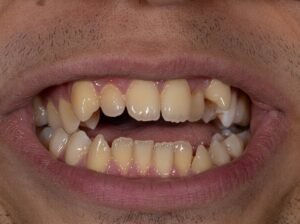
You look at your dentist's quote in the United States and your heart nearly skips a beat. $15,000 for a full rehabilitation. $4,000 for an implant. Then you open Google, search for "dental tourism Mexico prices," and find figures that seem from another planet: implants for $800, veneers for $500, all included in a 7-day package with a beachfront hotel. The temptation is real. And I understand why.
At AM Dental Studio, Dr. Alejandra Mora sees it every week. Patients call from Texas, California, Canada. People who want to take advantage of the economic benefit, but who also deserve to know the complete truth before getting on a plane. Because yes, Mexico has excellent professionals and more accessible prices. But it also has clinics that have turned dentistry into a production line where biological timelines are ignored, warranties disappear, and the patient is left to fend for themselves when something goes wrong.
Today we're going to talk straight. As always. Without selling fear and without selling smoke.
"It can't be done in such a short time": Dr. Alejandra Mora speaks plainly about dental tourism

Dr. Mora doesn't beat around the bush. When I asked her about dental tourism, her answer was a reflection of what makes her different: unfiltered honesty, even when it goes against the current.
"The truth regarding medical tourism, I have mixed feelings. The patient comes to undergo quite significant procedures, and I believe that through medical tourism, such major procedures cannot be done in such a short time. There is a risk that proper clinical timelines are not met, leading to clinical repercussions or that something may not turn out as well."
Mixed feelings: the economic advantage exists, but so does the risk
She doesn't demonize the practice. She acknowledges the obvious: "We have many better professionals in the health field, and it's a fact that here patients get a much more economical price compared to the United States." That's undeniable. An implant that costs $4,000 in Houston can cost $1,200 in Guadalajara with the same technical quality and certified materials. The difference isn't in the professional's skill, but in operating costs, regulations, and the profit margins of US insurers.
But then she adds the warning that almost no one gives: "Within the ethics and time limitations we face regarding treatments, yes, it is a problem." And there's the crux of the matter. The problem isn't Mexico. The problem is the express format in which many clinics package dentistry for tourists.
Dentistry is not a souvenir: why biological timelines don't negotiate with your return flight
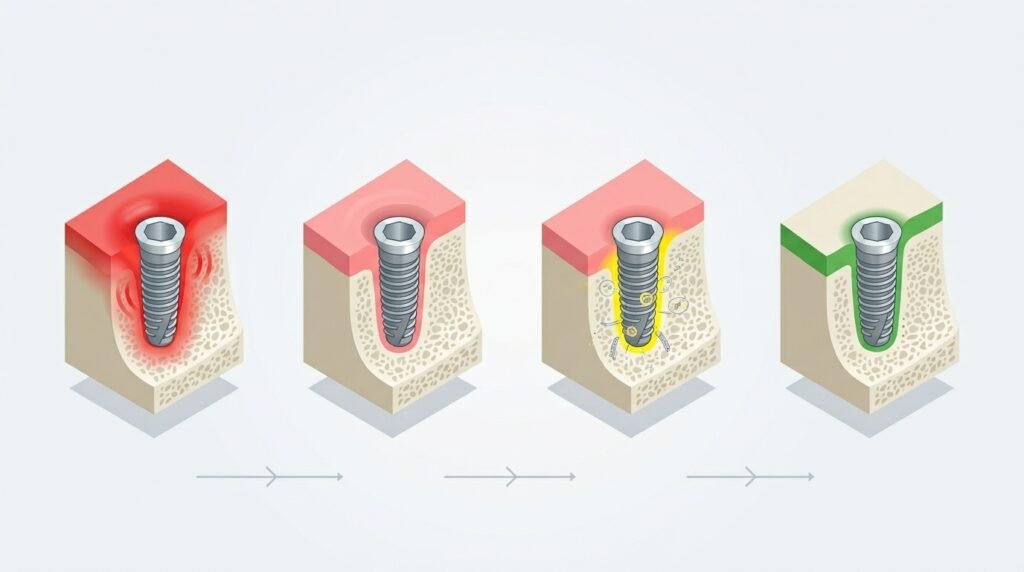
Imagine you get a dental implant today. The titanium is inserted into your jawbone. From that moment on, your body needs between 4 and 6 months for the bone to integrate with the implant (osseointegration). That process cannot be accelerated. No matter how much you pay. No matter that your return flight is on Friday.
If a clinic promises you an implant with a definitive crown in 7 days, it's skipping a fundamental biological step. They can place a temporary prosthesis, yes. But the definitive crown should not be placed until the implant is fully integrated. If they do it earlier, the risk of failure skyrockets. And a dental implant that fails not only leaves you without a tooth—it leaves you with bone loss in the area and a much more expensive repair than the original implant.
Dr. Mora insists: "Communication, planning, and above all, doing everything with ethics and respect are important." And communication begins with telling the patient the truth: some treatments require three or four visits, not one or two. If they promise you otherwise, they're not doing you a favor. They're lying to you.
The savings fever: how "express" clinics sell you a perfect smile in 7 days
If you Google "dental tourism Guadalajara," you'll find clinics promising savings of 50% to 70% with price lists in dollars. They include hotel, transportation, and even tours of Tlaquepaque and Tequila. They look more like a travel agency than a dental clinic. And that should set off your alarms.
All-inclusive packages: what they really include (and what they don't)
These packages typically offer:
- Airport pickup
- 3 or 4-star hotel
- Dental treatment in 5–8 days
- Optional tourist tour
What they don't include is what really matters: post-operative follow-up, a real warranty if something fails when you return to your country, nor the warning that some procedures need months of healing. They sell you the experience as if it were an all-inclusive Cancún package, but your mouth doesn't understand tourist packages.
At our clinic, when we do a smile design, the process is not a matter of one week. It involves diagnosis, digital planning, try-ins, adjustments, and follow-up. Some international patients can indeed complete the main part in one visit, but always with a clear plan of when they need to return or what check-ups they need to have in their home country. No shortcuts.
The honest calculation: flight, hotel, lost work days, and the touch-up in your city that no one told you about
Let's do real math. Imagine you fly from Dallas to Guadalajara to get 4 veneers.
- Round-trip flight: $400 USD
- 7 nights hotel: $500 USD
- Meals and local transportation: $250 USD
- Lost work days: variable
- 4 veneers at tourist clinic: $2,500 USD
- Total: $3,650 USD
Now imagine that one of those veneers detaches or chips after 3 months. You need to fly back or find a local dentist who will take on the repair (and charge you extra for touching someone else's work). Add another $800–$1,500 USD. And above all, add the stress and lost time.
Compare that with getting those same veneers from a trusted dentist in Guadalajara who works ethically: the price may be slightly higher on the first visit, but it includes real follow-up, a warranty, and the peace of mind that if something fails, you have someone to hold accountable without needing another flight.
The real savings exist, but they're not 70%. It's more modest when you add up all the hidden costs. And the advantage in Mexico's favor is still significant, but only if you choose wisely.
The 5 hidden dangers that dental tourism clinics don't mention in their brochures
1. Cross-contamination and sterilization: standards not always visible to the naked eye
In the United States, dental clinics are governed by FDA, OSHA, and state dental board standards. In Mexico, COFEPRIS regulates, but enforcement standards aren't the same. Clinics that work with dental tourism often show gleaming facilities on Instagram, but behind the photo, there are protocols that aren't always followed.
Instrument sterilization, glove changes between patients, use of disposable materials… all of that is invisible to the patient's eye. And if a clinic is operating at high volume (15 patients a day, all foreigners, all in a hurry), the risk of cutting corners on biosafety is real. Cross-contamination exists, and hepatitis C or a fungal infection don't understand borders.
2. Low-quality materials and warranties that disappear when you cross the border
The price difference between a high-end porcelain veneer (Emax, Empress) and a low-quality resin veneer is abysmal. Some tourist clinics quote for porcelain but place resin. Or they use low-fusion porcelain that chips easily. Or generic brand implants with no long-term studies.
And when the material fails, the warranty evaporates. Because the patient is already in their home country, 2,000 kilometers away, with no desire to go back and litigate. The clinics know this. That's why they offer 5- or 10-year warranties that in practice are worthless if you're not physically there to claim them.
3. Post-operative abandonment: who treats you if something hurts 5 months later?
This is the most common risk and the one that generates the most calls we receive at the clinic. A patient who had a treatment done in another city in Mexico (or in another clinic in Guadalajara) and now has dental sensitivity, inflammation, or an implant that is moving.
They call the original clinic and are told "that's normal, wait a few weeks." Or they simply don't get a reply. Then they look for a dentist in their city, who charges for a diagnosis and a repair that often involves redoing the entire work. Because no serious professional wants to take responsibility for a poorly executed treatment done by someone else.
Dr. Mora repeats it: without real follow-up, there's no safe treatment. And follow-up can't be done via WhatsApp.
Your self-protection checklist: 7 questions you must ask before buying a flight
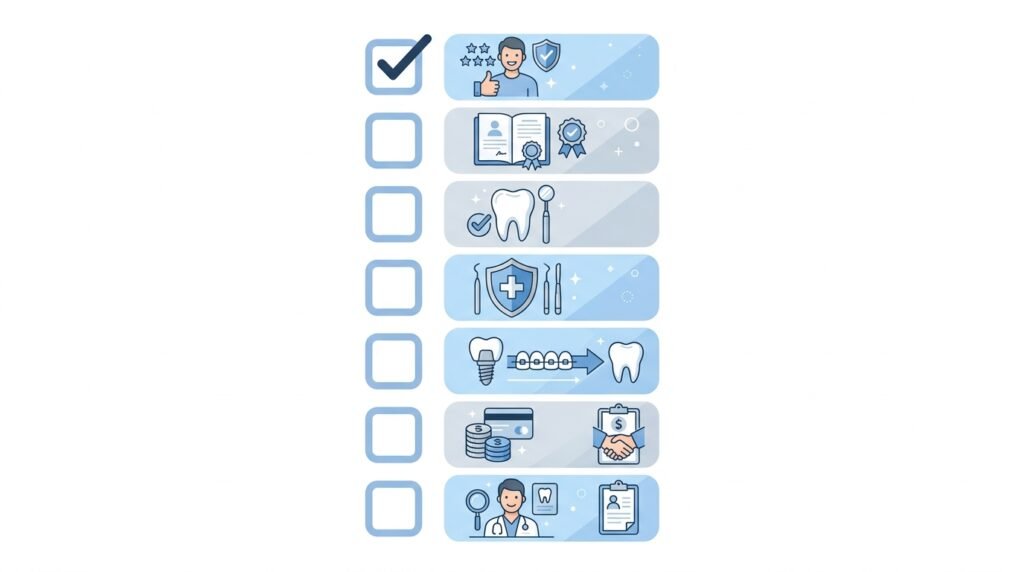
If after reading all this you're still considering dental tourism (because yes, done right it can be a valid option), at least do it with the tools to avoid falling into traps. Here are the 7 questions Dr. Mora recommends asking before paying a single peso:
The 7 questions that filter serious clinics from those that aren't
- Are you giving me a written treatment plan with realistic timelines? If they say "everything in 7 days," be suspicious. Your body sets the timelines, not the brochure. Demand a detailed document with phases, materials, brands, and estimated timelines including possible second visits.
- Can I speak with a previous patient who has gone through the same procedure? An ethical clinic with a track record has real patients willing to share their experience. If they refuse, ask yourself why.
- What follow-up protocol do you have if something goes wrong? Ask them to explain it in writing. Do they have agreements with clinics in your country? Do they cover the costs of a touch-up if you have to fly back? If the answer is vague, don't proceed.
- What brands of materials and implants do you use? Demand names. Straumann, Nobel Biocare, Astra Tech for implants. Emax or Empress for veneers. If they don't give you specific brands, they're likely using generic materials. Also ask for authenticity certificates.
- Can you show me photos of cases similar to mine, with long-term follow-up? The immediate "before and after" isn't enough. Ask to see photos 2, 3, or 5 years after treatment. That's where real quality shows.
- Who treats me if I have an emergency after returning to my country? If the clinic doesn't have a clear protocol to treat you remotely or refer you to a trusted colleague in your city, you're on your own.
- Are you offering me this for health or just for aesthetics? Dr. Mora is emphatic: not all aesthetic treatments are necessary, and especially not in an express format. If they offer you veneers without evaluating your bite, without discussing bruxism, or without considering your periodontal health, they are prioritizing sales over your well-being.
AM Dental Studio's stance: we don't have tourist packages, we have realistic treatment plans
Here we don't sell dental vacations. We sell health. And health doesn't adhere to deadlines set by a return flight. That said, we do treat international patients, and we do so with the same quality standards as our local patients. The difference lies in how we do it.
When it is worth traveling to Guadalajara for dental treatment
It's worth it if:
- You have flexibility to come more than once if the treatment requires it. Someone who comes to Mexico frequently for work or has family here.
- You seek quality at the best price, not the lowest price. You come knowing that cheap is expensive and are willing to pay for certified materials, digital diagnosis, and real follow-up.
- You have a complex case that is unaffordable in your country. A full rehabilitation, an All-on-4, or a smile design that would cost $45,000 in the US can be done in Guadalajara for a fraction, with the same quality, as long as you respect the timelines.
In these cases, we ask you to contact us in advance, send us your X-rays and your history, and we will give you an honest quote and a realistic treatment plan before you set foot on the plane.
When Dr. Mora tells you "no": the patient profiles that should not engage in dental tourism
There are patients whom Dr. Mora recommends not to undergo dental tourism:
- Patients with uncontrolled systemic diseases (unstable diabetes, severe hypertension, autoimmune diseases). These cases require much closer multidisciplinary follow-up.
- Patients who smoke heavily and are unwilling to quit during the postoperative period. Smoking compromises healing and the osseointegration of implants.
- Patients with severe bone loss requiring complex grafts. These procedures require months of healing and frequent check-ups. Doing them in a dental tourism format is reckless.
- Patients who are only looking for the lowest price. If your only priority is to pay the minimum, you will find clinics willing to take your money. But it won't be at AM Dental Studio.
As Dr. Mora says: "Communication, planning, and above all, doing everything with ethics and respect are important." And sometimes, the most ethical decision is to say "no."
Frequently Asked Questions
1. Is dental tourism in Mexico safe?
It depends on the clinic, not the country. Mexico has excellent professionals, but also clinics that prioritize volume over quality. Always demand a written treatment plan with certified brands and clear follow-up protocols.
2. What happens if my dental implant fails after returning home?
This is the biggest risk of dental tourism. The clinic may refuse to honor the warranty, and you will have to assume the cost of the repair in your country. That's why it's vital to choose a clinic with real post-operative follow-up and written warranties.
3. Why are dental implants in Mexico cheaper?
Due to lower operating costs, exchange rate differences, and the absence of intermediaries like US insurers. But an excessively low price (under $800 USD) may indicate generic materials or lack of proper sterilization protocols.
4. How long does a dental implant treatment take in a dental tourism format?
An implant with a definitive crown requires 4 to 6 months of osseointegration. Clinics that promise "implant with crown in 7 days" are either placing a temporary prosthesis or ignoring biological timelines, which skyrockets the risk of failure.
5. Can I get a full smile design in one week of vacation?
Some phases can be done (try-ins, temporaries), but the definitive result usually requires at least a second visit. Ethical clinics will explain this to you before you buy the flight.