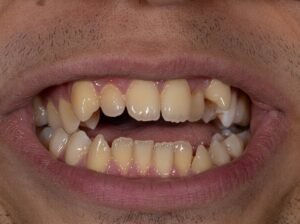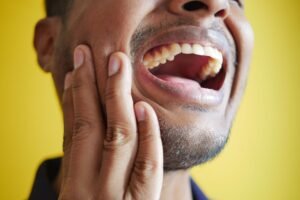
Yesterday a patient walked into the office. He was carrying a bag of artisanal granola, the expensive kind, the kind they sell at the organic market. He showed it to me with pride and said, "Doc, I eat this every day mid-morning. It's super healthy, zero warning labels." Then he opened his mouth. Incipient cavities in three molars. Generalized gingival inflammation. And cold sensitivity that wouldn't let him drink water without grimacing.
He looked at me in disbelief when I told him his "healthy" snack was part of the problem. Not because granola is poison, but because he was eating it at 11 am, then a green juice at noon, then coffee at 2 pm… and so on all day long. His mouth never got a break.
So let's talk straight. Because not everything that glitters is gold, and not everything sold as healthy is good for your teeth.
The healthy trap: why your favorite snack might be destroying your enamel
Marketing has gotten very clever. Words like "natural," "organic," "no warning labels" or "vegan" make you lower your guard. You think, "If it's healthy for my body, it'll be healthy for my teeth." And there's the mistake. Your teeth don't read labels. Your teeth react to three things: acidity (low pH), sugars (of any kind), and sticky textures. And many "healthy" snacks meet all three requirements at once.
The problem isn't the sugar, it's how often you eat it
This is what almost no one explains to you. Imagine you drink a 600 ml soda in 10 minutes. Your mouth suffers an acid attack lasting about 30–40 minutes, and then, if you eat nothing else, your saliva starts to repair the damage. Now imagine you spend the whole morning snacking: a granola bar at 10, green tea with honey at 11, a handful of dried fruit at noon. Your mouth doesn't have time to recover. The pH stays low for hours. And the enamel, which doesn't regenerate, becomes demineralized without you even noticing.
Dr. Mora sums it up with a phrase you should memorize: "It's better to drink a soda all at once than to be snacking on 'healthy' snacks all day. At least soda gives you an acid spike and then it's over. Snacking keeps you in constant acid." She's not telling you to drink soda. She's telling you that frequency matters more than quantity.
The pH chart you should have stuck on your kitchen wall
Neutral pH is 7. Tooth enamel starts to demineralize when pH drops below 5.5. Check this out:
| "Healthy" Food | Approximate pH |
|---|---|
| Lemon water (the kind you drink on an empty stomach) | 2.2 – 2.4 |
| Kombucha | 2.5 – 3.5 |
| Detox green juice | 3.5 – 4.0 |
| Ginger shot | 3.0 – 3.5 |
| Greek yogurt with fruit | 4.0 – 4.5 |
| Granola (depends on added fruit) | 4.0 – 5.0 |
| Dried fruit | 3.0 – 4.0 (and also sticky) |
Every time you consume something from this list, the pH in your mouth drops below 5.5. And if you do it several times a day, your enamel is literally dissolving for hours.
The 5 villains disguised as heroes: from granola to ginger shots
I'm not going to tell you to stop eating healthy. I'm going to tell you to know what each of these foods does to your teeth, so you can decide wisely.
1. Granola and energy bars: sticky, acidic, and full of hidden sugars
Granola is a perfect dental trap. It contains honey or syrup to bind the flakes (free sugar), dried fruit (acid + concentrated sugar), and a texture that sticks in the pits of your molars for hours. "Fit" bars are worse: they contain glucose syrup, maltitol, and other binders that make them chewy and adhesive.
When a patient tells me they eat "granola with yogurt and honey every day, because it's very healthy," I already know what I'm going to find on their exam: interproximal cavities in molars and a lot of bacterial plaque. Granola is an excellent food for your body. But for your teeth, it's like wearing a mask of sugar and acid for hours.
2. Flavored Greek yogurt and kombucha: when acid attacks without you noticing
Here's the biggest deception. Plain Greek yogurt is excellent: it has calcium, phosphorus, and casein, which protect enamel. But flavored Greek yogurt (strawberry, vanilla, coconut, etc.) contains a brutal amount of added sugar and a lower pH due to the acidulants used to give it flavor.
Kombucha is another trap. Yes, it has probiotics. But it also has a pH of 2.5 to 3.5. It's almost as acidic as a cola soda. If you drink it daily, sipping it all morning, your enamel is receiving a constant acid bath.
3. Dried fruit and detox green juices: concentrated sugar and acidity
Dried fruit is fruit that has had its water removed. Imagine eating 5 peaches in one go. That's a handful of dried peaches. All the sugar from the fruit concentrated in a sticky format that gets between your teeth and won't come out.
Detox green juices (spinach, celery, green apple, lemon, ginger) are an acidic cocktail. Green apple and lemon are especially erosive. And since you drink them thinking they're "medicine," you don't question their effect on your enamel. If you already have dental sensitivity, these drinks could be making it worse without you knowing.
4. Lemon water on an empty stomach and ginger shots
Lemon water on an empty stomach is a classic of "detox" diets. The problem is that lemon has a pH of 2.2, and the first thing it touches when it enters your mouth is your teeth. If you also brush right afterward (as many people do to "get rid of the taste"), you're rubbing acid against your softened enamel. A silent disaster.
Concentrated ginger shots are just as acidic, and they also contain sugar or honey to make them drinkable. Another torpedo to your enamel's waterline.
5. Flavored plant-based milks
The oat milk, almond milk, or coconut milk you order with your "healthy" coffee often contains added sugars, stabilizers, and acidulants. Homemade almond milk is not the same as store-bought. Check the label. If it has more than 5 ingredients, it's probably not as innocent as it seems.
Dr. Mora explains why a single soda is less harmful than snacking all day
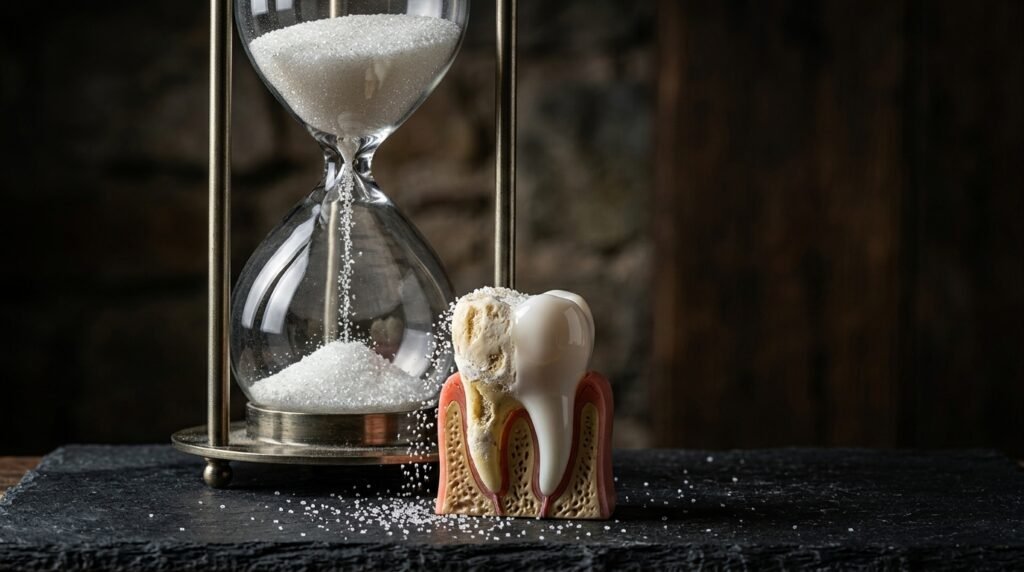
This is the part that surprises all my patients. When I tell them that a soda drunk in one sitting is less harmful than sipping kombucha for three hours, they look at me with skepticism. But the science backs it up.
The demineralization window: 30 minutes that your teeth need to recover
Every time you eat or drink something (anything other than water), the pH in your mouth drops. Bacteria in plaque convert sugars into acids, and those acids attack enamel. Your saliva, which is incredibly wise, starts working to neutralize that acid and repair the damage. But it needs at least 30–40 minutes to do so.
If during that time you eat or drink again (a little coffee, a sip of kombucha, a piece of a bar), the pH drops again. And so it goes all day long. Your saliva never has time to do its job. The enamel slowly demineralizes, and sensitivity and cavities appear.
As we've already explained in our article on how to strengthen tooth enamel, the key isn't to demonize foods, but to concentrate your eating/drinking moments and give your mouth time to recover between them.
"Don't brush right after eating something acidic": the mistake we all make
This is one of the pieces of advice I repeat most often in my practice. Intuition tells you that after eating something acidic, you should brush your teeth immediately to remove the acid. But it's actually the opposite. After an acid attack, your enamel is softened, like a wet sugar cube. If you brush it at that moment, you're literally sanding down your enamel.
Wait at least 30 minutes. During that time, drink water, chew sugar-free gum with xylitol, or eat a small piece of panela cheese. Then brush with a soft-bristled brush and a fluoride toothpaste.
Your defense protocol: how to eat healthy without ruining your smile
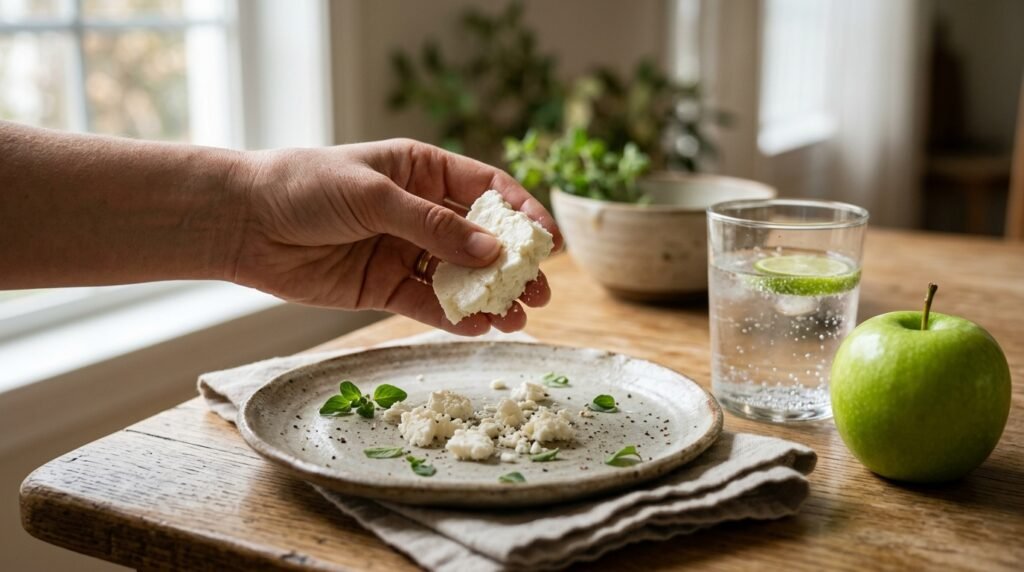
I'm not going to leave you alone with the problem. Here's your dental survival kit to keep eating healthy without destroying your enamel.
The 30-minute rule and using a straw
- Concentrate your snacks into specific moments. If you're going to eat granola, eat it in one sitting, not throughout the morning. If you're going to drink a green juice, drink it in 10 minutes, not sipping it over two hours.
- Wait 30 minutes before brushing after consuming anything acidic.
- Use a straw for green juices, kombucha, or lemon water. The straw reduces direct contact of the acid with your front teeth. It's not a perfect solution, but it helps.
- Rinse with water after consuming something acidic or sugary. It doesn't replace brushing, but it dilutes the acids while you wait the 30 minutes.
Protective snacks: panela cheese, apples, and other unexpected allies
Dr. Mora always recommends keeping handy snacks that not only don't harm but also help protect your teeth:
- Panela cheese: It's alkaline, rich in calcium and phosphorus, and helps neutralize oral pH. A small cube after an acidic meal is a great ally. Plus, it's cheap, easy to find, and typical of Mexican cuisine.
- Apple (whole, not juiced): The act of biting and chewing an apple stimulates saliva production and helps clean the tooth surface. But be careful: it's slightly acidic. Don't use it as a "natural toothbrush," but as an occasional snack.
- Raw nuts (walnuts, almonds): They are alkaline, rich in calcium, and low in sugar. Just make sure they aren't caramelized or roasted with honey.
- Raw carrot: Chewing it stimulates saliva and strengthens gums. It's the perfect between-meal snack.
- Plain water: The best resource. Drinking water during and after meals helps wash away food debris and dilute acids.
And remember: none of this replaces regular professional dental cleanings, which remove the plaque and tartar that your toothbrush can't reach.
The Smart Snacking Decalogue: A Practical Guide for Real Life
I'll close with concrete recommendations for real life, for the daily routine of someone who lives in Guadalajara, eats well, and doesn't want to give up their dental health.
What do I do after tacos with green salsa?
Tacos are inevitably part of our life. Green salsa is acidic (pH 3.5–4.0). After eating tacos with salsa, drink plenty of plain water, chew a sugar-free gum with xylitol, and wait 30 minutes before brushing. And floss. The meat and fiber from the tacos get stuck between your teeth and, combined with the acid from the salsa, are a bomb for interproximal cavities.
How to survive aguas frescas and the 11 am coffee?
Aguas frescas (lime, hibiscus, tamarind) are acidic. If you drink them daily, do so at a specific time of day and, if possible, use a straw. The mid-morning coffee is a classic office habit. If you add store-bought flavored oat milk, you're adding sugars. Better to have black coffee or with a splash of regular milk. And after coffee, drink water.
The summary you can stick on your kitchen wall
- Less snacking, more concentrated meals.
- Wait 30 minutes to brush after something acidic.
- Use a straw for acidic drinks.
- Panela cheese after something acidic.
- Plain water as your main drink.
- Sugar-free gum with xylitol as an ally.
- Visit your dentist every 6 months, not just when something hurts.
As I always say in my practice: It's not about stopping eating what you like. It's about knowing how, when, and how often to eat it. Because a healthy diet shouldn't damage your smile.
If after reading this you're wondering whether your diet is affecting your teeth, make an appointment. At AM Dental Studio, we'll do a complete evaluation and give you a personalized plan so your mouth is as healthy as your body.
Frequently Asked Questions
1. Is granola bad for your teeth?
It's not bad in itself, but it's sticky, often acidic, and stays adhered to your molars for hours. If you eat it, do so at a specific time, not throughout the morning, and drink water afterward.
2. Do green juices damage tooth enamel?
Yes. Green apple, lemon, and ginger have a very low pH (3.0–4.0) that erodes enamel. Drink them with a straw, don't sip them for hours, and wait 30 minutes before brushing.
3. What healthy snacks don't damage teeth?
Panela cheese, raw nuts (no honey), raw carrots, and whole apples (chewed, not juiced) are the best options for your teeth.
4. Is kombucha better than soda for your teeth?
In terms of pH, kombucha is almost as acidic as a cola soda (pH 2.5–3.5). The difference is that soda is usually consumed faster, while kombucha is often sipped over a longer period, prolonging the acid attack.
5. How long should I wait to brush my teeth after eating something acidic?
At least 30 minutes. Brushing immediately afterward rubs the acid into softened enamel and accelerates dental erosion.
¿Hablamos?
La Dra. Alejandra Mora y su equipo están listos para escucharte.
Cuéntanos tu caso y te responderemos todas tus dudas sin compromiso.
🕐 Respondemos en menos de 2 minutos
🔒 Consulta 100% confidencial y sin compromiso