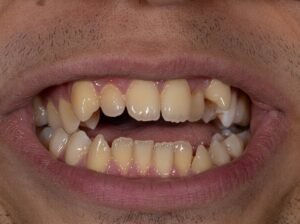
Last week, a 29-year-old patient walked into the office. She had a crumpled extraction order from another clinic in her hand and a defeated look on her face. "They told me all 4 wisdom teeth have to come out. But nothing hurts. Do I really have to go through this?"
I asked her to sit down. I pulled up her panoramic X-ray on the screen. And in less than three minutes, her expression changed completely. Not because I told her what she wanted to hear. But because she saw the evidence with her own eyes.
Dr. Alejandra Mora repeats this daily at AM Dental Studio: "If a patient's third molars are well-positioned, functional, and properly related to the second molars, there is no absolute need to extract them." That phrase is what separates an ethical consultation from unnecessary surgery.
But make no mistake: not all wisdom teeth can be kept. There are cases where they truly are a ticking time bomb. And that's exactly what I'm going to explain to you now: when yes, when no, and how to decide without fear.
The Myth of Mandatory Extraction: What Instagram Doesn't Tell You
For years, you were sold an idea: wisdom teeth = surgery. No nuances. No exceptions. But modern dentistry has moved beyond that knee-jerk approach.
The logic of "remove to prevent": medicine or billing?
There are clinics that operate on a production model: the dentist earns a percentage of each treatment they perform. When that's the system, the incentive to recommend unnecessary extractions is real.
I'm not saying every colleague who recommends extraction does it for money. Many are simply repeating what they learned 20 years ago. But you, as a patient, deserve to know that the decision to extract must be based on symptoms and radiographic evidence, not on a "just in case" policy.
The American Dental Association and the Mayo Clinic agree: if wisdom teeth show no signs of disease, there is no evidence to justify universal prophylactic extraction. To be clear: you don't remove them "in case they hurt later."
The TikTok Balance: Between Terror and Negligence
Open TikTok for five minutes and you'll find two extremes: the dentist who declares "all wisdom teeth must come out NOW" and the influencer who boasts "I still have mine and I'm fine, never get yours removed."
Both ignore the fundamental truth: every mouth is a unique case. Neither your symptom-free friend is your diagnosis, nor is that horror reel your sentence.
Dr. Mora sums it up with her characteristic clarity: "The patient is the one who decides, but with the evidence on screen and the explanation of why yes or why no." Without evidence, there is no decision. Only fear.
So then, how do you know if your wisdom teeth can stay? Here are the criteria.
"If they are well-positioned, functional, and healthy, there is no absolute need to extract them"
This is the phrase Dr. Alejandra Mora repeats every week in practice. It's not a slogan. It's the criterion she applies with every patient who sits in her chair.
The 3 Criteria for Your Wisdom Teeth to Stay Where They Are
If you meet these three points, the decision to keep them is perfectly valid and supported by evidence:
- Correct position, no unusual angulation. On the panoramic X-ray, there should be enough space between the second molar and the ramus of the mandible. If the tooth points forward, backward, or is lying down, the risk skyrockets.
- Actual chewing function. If the tooth contacts its antagonist (the opposing tooth it fits with), it chews. It's not a "decorative" piece. You're using that tooth every time you eat.
- Periodontal health with no food traps. The gum should not be inflamed, there should be no pockets where food gets trapped, and your toothbrush should be able to clean it well. Hygiene in that area is the most determining factor for long-term success.
If you meet all three, your wisdom teeth can stay with you. But there's one condition: you cannot forget about them. They need to be monitored.
The check-up almost no one gets (and that prevents last-minute scares)
Many patients keep their wisdom teeth for years without issues. But others lose them because no one told them they needed to monitor them. Active surveillance is a real clinical tool, not an excuse to avoid surgery.
As we explain in our guide on when to move from monitoring to extraction, most problems appear when the X-ray is skipped for several years in a row. A control panoramic X-ray every 12-18 months is enough to detect any change before it hurts.
Now, what happens when the criteria aren't met?
The 5 Signs That Your Wisdom Tooth Actually Needs to Come Out
Not everything is about preserving. There are situations where keeping a wisdom tooth is playing Russian roulette. These are the five red flags that justify sitting down to discuss surgery without drama.
1. Pericoronitis: When the gum swells and ruins your weekend
Pericoronitis is the classic Sunday night emergency. The tooth is partially erupted, a flap of gum covers part of the crown, and bacteria and food debris get trapped there where you can't clean it. The result: intense pain, swelling, and in severe cases, fever.
An isolated episode can be treated. If it repeats, extraction stops being an option and becomes the solution.
2. Cavity in the second molar: The damage you don't see until it's too late
When the wisdom tooth is angled forward, it creates a gap between itself and the second molar. That gap is a plaque trap that your toothbrush can't reach. The result is a cavity on the back surface of the second molar.
The worst part: that cavity doesn't hurt until it's very advanced. And when it does hurt, sometimes you already need a root canal on both molars or, directly, you lose both teeth. Timely extraction of the wisdom tooth can save your second molar.
3. Crowding and orthodontics: When there's not enough space
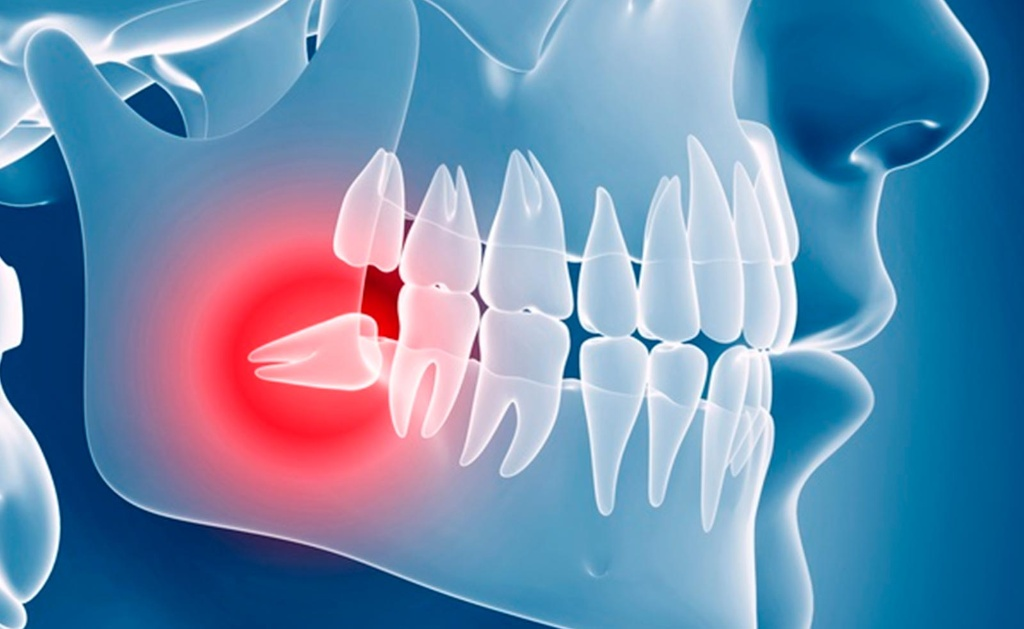
Do wisdom teeth actually push and crowd teeth? The scientific evidence isn't conclusive, but in the context of orthodontic treatment, lack of space is a real problem.
If you're considering braces or invisible aligners, your professional will evaluate the position of your wisdom teeth to decide if they interfere with the tooth movement plan. Sometimes, extractions are necessary to gain space and prevent relapse after treatment. We explain it in our guides on conventional braces orthodontics and Invisalign invisible aligners.
4. Cysts and root resorption: The ghost that appears on the X-ray
Sometimes, the follicle surrounding an impacted tooth enlarges and forms a dentigerous cyst. That cyst, left untreated, destroys bone and can compromise the second molar and even the inferior alveolar nerve. It's not common, but when it appears, surgery is non-negotiable.
5. Impacted teeth that prevent you from cleaning properly
A partially impacted tooth that doesn't hurt but traps food every day is a ticking time bomb. You can go years without discomfort and then suddenly discover that the second molar has a cavity the size of a chickpea right where you can't see it. Extraction in these cases isn't an option—it's protecting your long-term dental investment.
But even when extraction is necessary, it doesn't have to be torture. And here comes what almost no one tells you.
"Conscious sedation is the solution for patients with dental anxiety or phobia"
This phrase is from Dr. Mora. And it changes the life of anyone who has been avoiding the dentist for years. If fear of surgery is holding you back, today you have options that didn't exist before.
As we explain in our article on dental anxiety and conscious sedation, this technique allows you to be relaxed, pain-free, and without a traumatic memory of the procedure. It's not general anesthesia. It's a state of deep calm where you respond to stimuli but feel no anxiety or pain.
Many patients who postponed their extraction for years have had all 4 wisdom teeth removed in a single session thanks to conscious sedation. No fear. No drama.
Your 3-Step Action Plan: How to Decide Today What to Do With Your Wisdom Teeth
- Get your panoramic X-ray. It's your main tool. Without it, any decision is a gamble. In a consultation evaluation, the panoramic X-ray pays for itself in peace of mind.
- Review the 3 preservation criteria and the 5 warning signs I explained above. Honestly evaluate which ones match your case.
- Ask the 3 key questions. If you've already been recommended extraction and you have no discomfort, ask: Can you show me on the X-ray why? What happens if we monitor them? Is this extraction for health or for aesthetics? If the professional gets annoyed, you have your answer.
And remember: keeping your wisdom teeth demands impeccable hygiene and regular professional cleanings. If you can't clean that area properly, the risk of cavities and infection skyrockets.
Frequently Asked Questions
1. Do wisdom teeth always have to be removed even if they don't hurt?
No. If they are straight, have enough space, don't damage the second molar, and you can clean them properly, extraction is not necessary. Periodic monitoring with X-rays is a valid option.
2. What happens if I don't get my wisdom teeth removed?
If there are risks like cavities in the second molar or repeated infections, the problems can worsen. If there are no symptoms or signs of disease, you can keep them with regular check-ups.
3. Does wisdom tooth extraction hurt?
The procedure is performed under local anesthesia and doesn't hurt during surgery. The postoperative period is managed with medication. Conscious sedation is ideal for patients with anxiety.
4. Do wisdom teeth push other teeth?
The evidence isn't conclusive. They may contribute to crowding in some cases, but they aren't the sole cause. Your orthodontist will assess whether they interfere with your orthodontic plan.
5. At what age is it best to have wisdom teeth removed?
There's no fixed age. It depends on when problems arise. Before age 30, recovery is usually faster.
¿Listo para saber si tus muelas del juicio se quedan o se van?
Agenda una evaluación con la Dra. Alejandra Mora.
Veremos tu radiografía, analizaremos tu caso y tomarás la decisión con evidencia real, sin miedo.
🕐 Respondemos en menos de 2 minutos
🔒 Consulta 100% confidencial y sin compromiso