

Choosing a dentist isn't like choosing a restaurant. A bad dining experience isn't what's at stake here… your health is. And if there's one thing I’ve learned, it's that looking for the cheapest option is almost never the best decision when it comes to your mouth. Your body is your temple, and dental health is a basic necessity, not a luxury.
If you are wondering how to know if you've found a good dentist, here I explain exactly what you should look for—beyond titles on the wall and attractive prices.
Why choosing your dentist wisely is a decision that impacts your entire life
A poorly performed treatment doesn't just hurt in the moment. It can turn into:
- Unnecessary repetitions
- Infections
- Tooth loss
- Duplicate expenses
- Years of discomfort
I have seen people who prioritized price and ended up paying triple to correct mistakes. And that’s when I understood something very clearly: haggling over your health is haggling with yourself.
A good dentist doesn't just fix teeth. They protect your quality of life.
The first appointment: immediate signs that tell you if you are in good hands
The first visit is not just for you to be checked. It is for you to evaluate.
The importance of the “click” and genuine trust
Almost no one says this, but it’s key: there has to be a “click.”
From the first appointment, you should feel comfortable. In my experience, when you click with the doctor's personality, everything flows. If you notice coldness, excessive distance, or a real lack of interest, that is already a sign.
Trust isn't imposed; it's felt.
If you leave the consultation with more doubts than peace of mind, it’s probably not the right place.
Cleanliness, presence, and body language
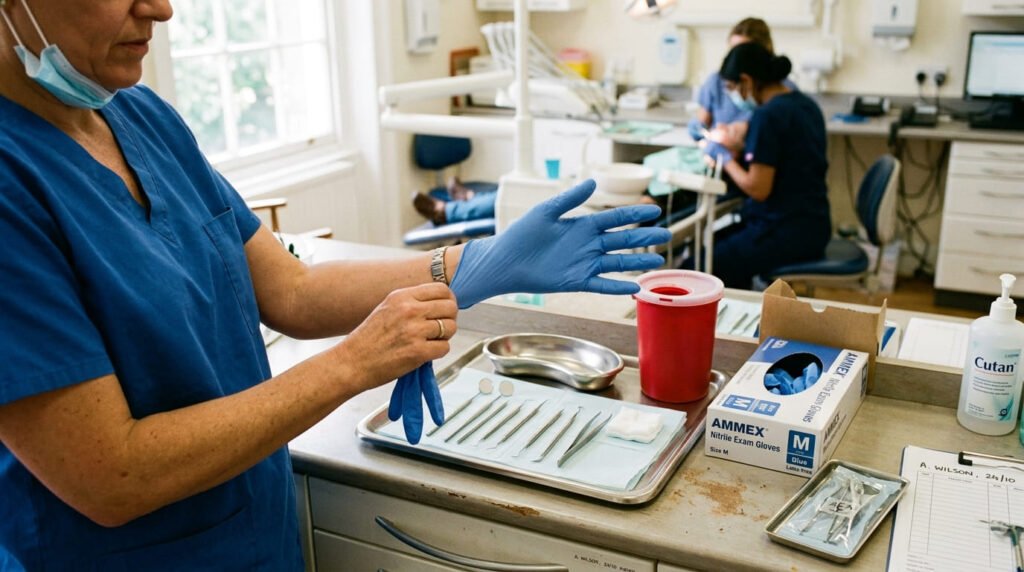
It may seem basic, but it isn’t.
- Is the clinic spotless?
- Does the dentist maintain a professional appearance?
- Does the team look organized?
- Do they look you in the eye when explaining things?
If you notice neglect in what is visible, what makes you think the invisible will be flawless?
Hygiene in a dental clinic is non-negotiable. It is a direct sign of professionalism.
How they explain the treatment to you
A good dentist:
- Explains things to you without unnecessary technical jargon.
- Gives you options.
- Answers questions without getting annoyed.
- Does not pressure you to decide in that moment.
Something I consider fundamental is that the right professional focuses on resolving your current situation, not on dramatizing what was done to you before.
If they spend more time criticizing past work than giving you clear solutions, be careful.
Professional ethics: the filter almost no one considers
This point marks a huge difference between an average dentist and a truly good one.
When a dentist speaks poorly of other colleagues
A personal rule I always apply: If a doctor needs to put someone else down to stand out, something isn't right.
All dentists have different criteria, different styles, and different training. But speaking poorly of colleagues as a business strategy is a huge red flag.
Professional ethics are non-negotiable.
Focus on solutions vs. focus on criticism
A good dentist doesn't waste time destroying the past.
They focus on improving your present.
In my experience, the right professional offered me "hand-in-hand" guidance, explaining step by step what we would do to correct the situation. That creates security.
The focus should always be constructive.
Señales técnicas que sí importan (pero no lo son todo)
Ahora sí, lo racional.
Porque sí: los títulos y la experiencia cuentan.
Instalaciones y tecnología
- Equipos modernos.
- Rayos X digitales.
- Protocolos de esterilización claros.
- Materiales de calidad.
Pero ojo: tecnología sin ética no sirve.
Actualización y formación continua
La odontología evoluciona constantemente.
Un buen dentista invierte en cursos, congresos y certificaciones.
Puedes preguntar directamente:
“¿Con qué frecuencia se actualiza?”
Un profesional seguro no se ofende por eso.
Opiniones y reputación online
Hoy es fácil investigar.
Revisa reseñas en Google, redes sociales y testimonios reales. No busques solo 5 estrellas; lee los comentarios detallados.
Si estás buscando un buen dentista en Guadalajara o Zapopan, revisa experiencias locales. Las opiniones cercanas suelen ser más reveladoras.
Red flags that indicate you should get out of there
If you detect any of these signs, you’re better off looking for another option: Pressure to pay immediately.
- Pressure to pay immediately.
- Alarmist diagnoses without a clear explanation.
- Aggressive criticism of other dentists.
- Evident lack of hygiene.
- Constant changes in the budget.
Remember: giving yourself the value you have as a person means choosing quality.
How to choose a good dentist in Guadalajara or Zapopan
If you are in these cities, apply this checklist:
- Check local reviews.
- Schedule an initial assessment appointment.
- Evaluate the care, not just the budget.
- Observe the facilities.
- Confirm training and experience.
Don’t choose based on price. Choose based on trust.
Conclusion: Your dental health is not a place to cut corners
Knowing if you've found a good dentist doesn't just depend on diplomas.
It depends on:
- How they make you feel.
- Their professional ethics.
- Their focus on solutions.
- The visible and invisible quality of their work.
Your body is your temple. And when you understand that, you stop looking for the cheapest and start looking for the best. Because a treatment well done can last you a lifetime.
Because a treatment well done can last you a lifetime.
Frequently Asked Questions
How do I know if my dentist is truly good?
If they combine ethics, good communication, clean facilities, and clear solutions without speaking poorly of other colleagues.
Is it a bad sign if a dentist criticizes previous work?
Yes. They can explain technical failures, but if they do it to discredit another professional, it is a red flag.
What should I ask during the first appointment?
Ask about treatment options, duration, materials, detailed costs, and the professional's experience.
Should I choose the cheapest dentist?
No. Dental health is an investment, not an expense.