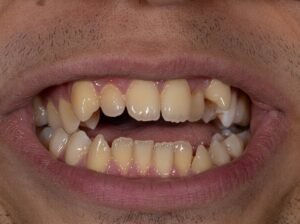
When you think of a perfect smile, you probably picture that flawless, almost fluorescent whiteness seen on social media and commercials—that shade that seems to say "success, health, youth." But what if I told you that chasing that nuclear white might be exactly what makes you look older and less natural?
At AM Dental Studio, I always say that a healthy smile is much more than just white teeth. And after seeing hundreds of cases in practice, I can assure you that true luxury isn’t about the most extreme shade—it’s about the harmony you achieve without destroying your dental structure. So let’s be clear: are ultra-white teeth a desirable goal or an aesthetic trap?
Dr. Alejandra Mora explains it with no filters: "Super white teeth can only be achieved in two ways: either by getting multiple whitening treatments or by getting veneers. Obviously, both situations require an investment."

That phrase sums up the reality of what it means to chase a shade that nature doesn’t provide.
The Perfect White Myth: The Truth Instagram Won’t Tell You
We live bombarded by images of smiles that look like porcelain. But what they don’t tell you is that most of those smiles you see on social media don’t exist in real life without aggressive intervention. Human nature has its limits, and the color of your teeth is one of them.
The Real Anatomy of Your Tooth: Translucent Enamel, Not White
Many people think enamel is white like milk. But the reality is different: healthy enamel is translucent, like frosted glass. What actually gives teeth their color is dentin, the layer right underneath.
Dentin is naturally yellowish. Depending on your genetics, that shade can range from light ivory to grayish or even a reddish amber. When someone has "naturally white" teeth, what they actually have is very light dentin and enamel that lets a lot of light through.
This point is critical. Dr. Mora makes it clear: "Teeth don't achieve an ultra-light shade just through whitening because that's not their natural color. With whitening, we only remove external pigmentation acquired through diet." That's why, when someone shows you an absolute white smile, they're not showing you a whitening job—they're showing you veneers.
The Chromatic Scale: At What Shade Does "Ultra" Start and "Fake" Begin?
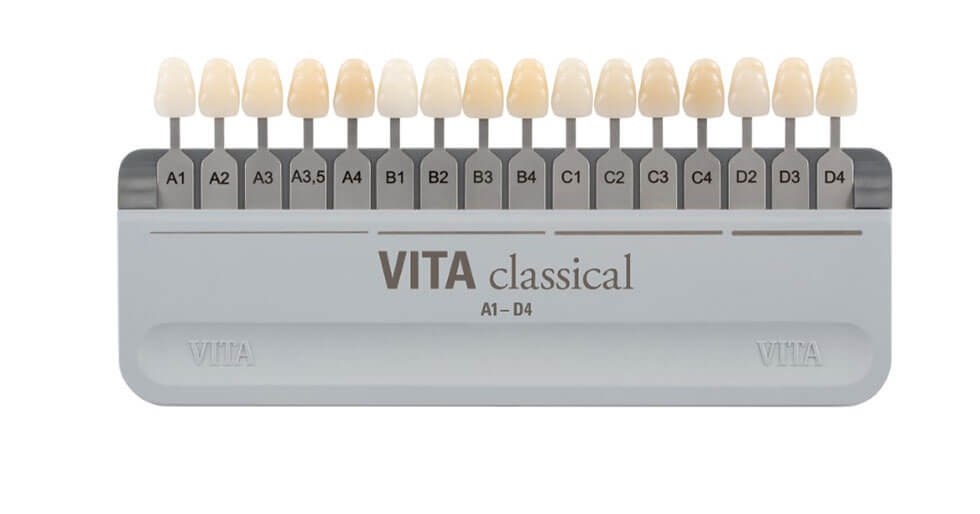
In cosmetic dentistry, we use shade guides, the most common being the VITA scale. It ranges from reddish or grayish tones (A, B, C, D) to brightness levels from 1 to 4. A healthy natural tooth is typically between A2 and B2. When we start going down to A1 or B1, the tooth already looks very light. And when we talk about "BL" (bleached) shades or the famous 0M1, that's already artificial territory: colors that can only be achieved with porcelain veneers.
Professional teeth whitening (done right, in-office) can lighten between 3 and 8 shades, depending on the patient. But it will never take you to absolute white because the limit is set by your natural dentin. If someone promises you "paper white" with simple whitening, they are lying to you.
The Only Two Paths to Extreme White: The Good, The Bad, and The Expensive
Every patient walks in with a reference photo of their favorite artist. But they almost never ask me what's behind that smile: the biological cost, the lifetime maintenance, and the risk that the final result won't age well with their face. It's not about demonizing veneers, but about you making the decision with real data on the table.
Aggressive Whitening: How Far Can You Go Without Breaking Your Teeth?
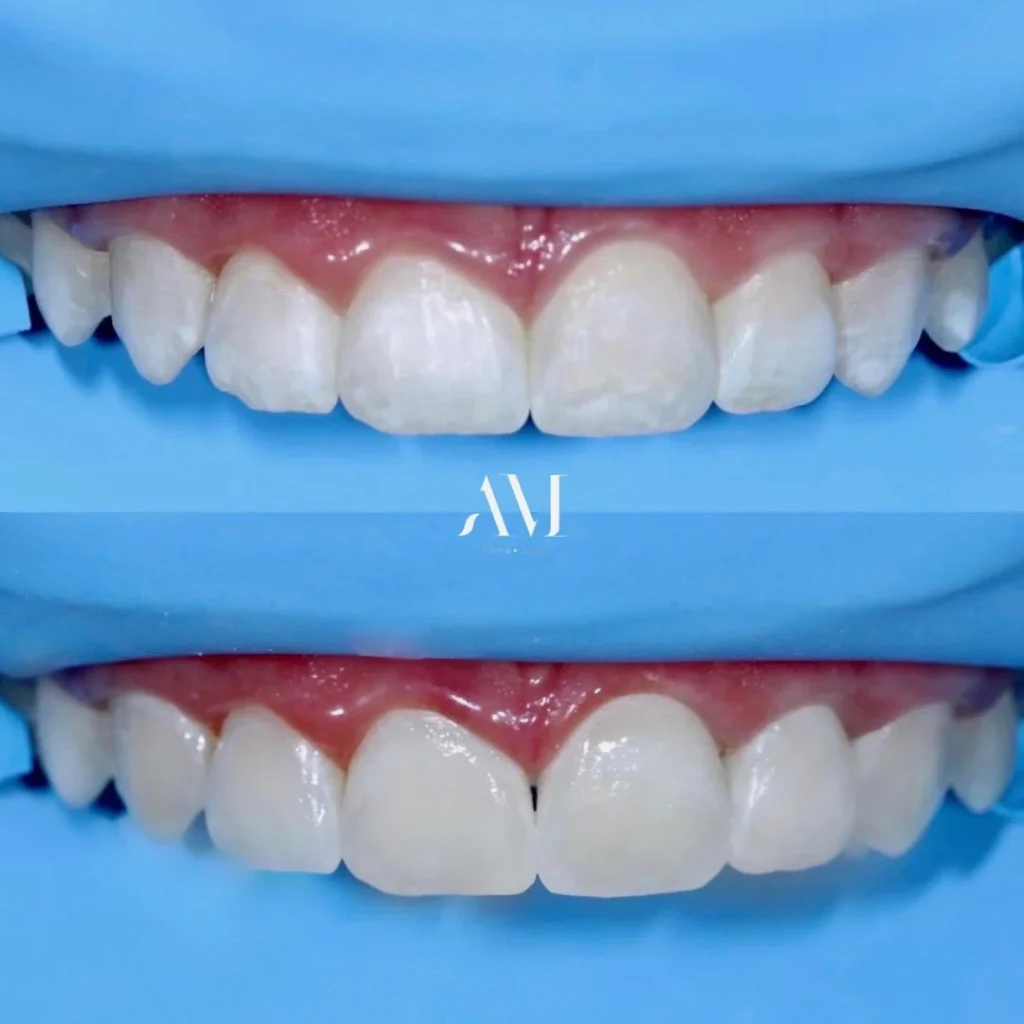
Dr. Mora explains it with surgical precision: whitening only removes external pigments. It cannot alter the base color of your dentin. That's why, when someone becomes obsessed with an impossible white, they fall into the trap of using industrial-grade peroxides bought online. The result is a disaster: porous, demineralized enamel, and dental sensitivity so sharp they can't even drink cool water. And worst of all: the color is still not what they were looking for.
Hydrogen peroxide breaks down pigment molecules trapped between enamel crystals. This does lighten the tooth, but there comes a point where the enamel becomes so translucent that it starts to show more of the underlying dentin. If your dentin is yellow, excessive whitening can actually make the tooth look grayish or dull instead of whiter.
Veneers: The Investment That Can Work For You or Against You
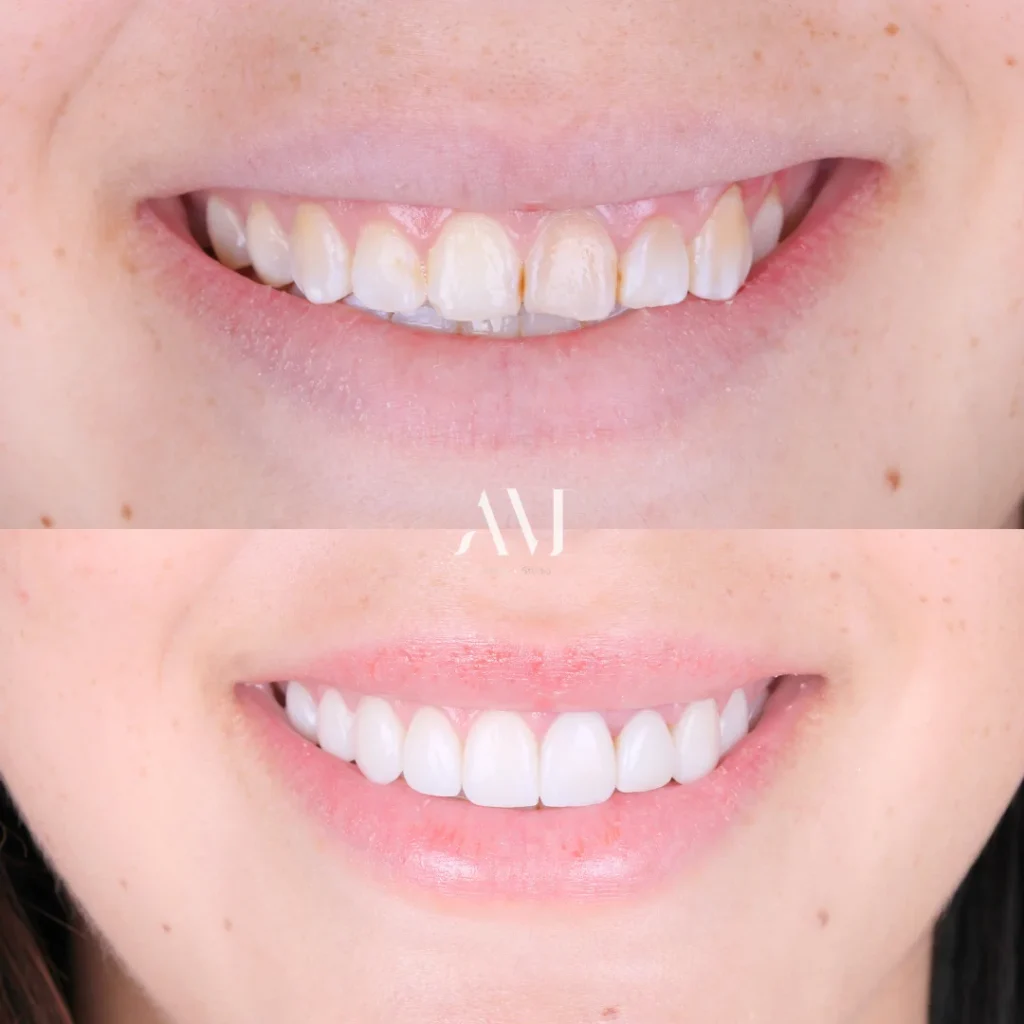
To achieve a white that nature doesn't provide, you need to cover the tooth with something. That's where two options come in: composite veneers and porcelain veneers. Dr. Mora is emphatic on this subject: veneers achieve "uniform, white shades, without necessarily needing whitening, only it tends to be more expensive depending on the material used. It's a larger investment."
That larger investment she mentions isn't just financial—it's biological. If you over-drill a healthy tooth, you open the door to chronic sensitivity, leaks, and cavities under the veneer. The greatest luxury is having a natural smile without needing to file down healthy teeth.
What No One Tells You About "Nuclear" White: The Effect That Ages Your Face
This is where I want you to pay close attention. Because this is the mistake I see most often in practice and the hardest to reverse: patients who pay to look younger end up with a smile that adds years to them.
The Contrast That Highlights Your Wrinkles
Over the years, enamel naturally wears down and teeth tend to darken slightly. The skin, in turn, loses collagen, expression lines appear, and facial tone becomes duller. When that mature face is framed by a row of teeth in absolute artificial white, the human eye detects an immediate dissonance. Nuclear white acts like a spotlight that illuminates and highlights all the imperfections of the skin around it.
In my more than 10 years of experience, I've seen how overly white veneers create what I call the "mask effect": the mouth visually separates from the rest of the face. Harmony is broken. That's why, in every smile design, I always aim for the final color to respect your age and features, not erase them.
The Stiffness of the Fake Smile
A natural tooth has microtextures, lobes of development, and translucency at the incisal edge that changes with age. Industrial-grade veneers that chase only perfect white are often flat, opaque, and overly symmetrical. The result is a smile that looks like it was drawn with liquid corrector: perfect in photos, but static and stiff in motion.
"A beautiful smile isn't the one that looks good in a selfie, but the one that looks alive when you truly laugh." The stiffness of a poorly designed veneer not only affects aesthetics—it can also interfere with the way you move your lips when you speak.
The Future of Your Smile: Smart Alternatives That Are Actually Worth It
True luxury isn't about excess, but about conservative excellence. The most exclusive thing today isn't sporting the whitest white, but having an impeccable smile without having sacrificed your dental health in the process.
Microabrasion: The Secret Technique for Stubborn Stains
There are cases where whitening isn't enough because the stains are structural: mild fluorosis, white spots from bracket decalcification, or enamel hypoplasia. For this, dental microabrasion exists: a chemical polish that sweeps away stubborn stains without needing to drill the tooth for a veneer.
The "Slow" Trend: Whitening That Respects Your Timeline
Dr. Mora reminds us there's no rush. In response to the urgency of "I want it right now," "slow whitening" is emerging. It involves using customized trays with a low concentration of carbamide peroxide over several weeks. The advantage is that it generates less sensitivity and the result is more stable. Investing in a treatment that respects your biological timeline is true luxury.
Checklist: What a Serious Dentist Will Never Promise You
- "Permanent nuclear white with just whitening": False. Whitening will always need touch-ups and has a biological limit.
- "Veneers without drilling in all cases": False. Porcelain veneers require minimal drilling, although there are very specific exceptions.
- "Immediate results without sensitivity": False. A properly done whitening will always generate some sensitivity.
- "I guarantee this exact shade from the guide": False. The final result depends on your dentin, not on a promise.
- "You won't need check-ups after veneers": False. Veneers require lifelong maintenance with guided hygiene and occlusal adjustments.
FAQs
1. Is it possible to have ultra-white teeth naturally?
No. Healthy tooth enamel is translucent, and the color comes from dentin, which is naturally yellowish. Ultra-white shades are only achieved with veneers or aggressive whitening that aren't natural.
2. Do dental veneers for extreme white damage teeth?
If healthy teeth are unnecessarily drilled, yes. Enamel wear opens the door to sensitivity and leaks. An ethical professional always prioritizes conservative options before proposing veneers.
3. Why do overly white teeth make me look older?
Nuclear white contrasts unnaturally with mature skin, highlighting wrinkles and expression lines. Facial harmony breaks down, and a mask effect appears that ages more than a warm, natural shade.
4. What is the healthiest alternative to lighten teeth?
Supervised professional whitening, either in-office or with low-concentration at-home trays, which respects the tooth's biological timeline without generating extreme sensitivity or rebound.
5. How long does a properly done teeth whitening last?
A professional whitening with customized trays and proper maintenance can last between 1 and 3 years. It all depends on your hygiene habits and your consumption of staining substances like coffee, wine, or tobacco.