For years there was debate about “silver fillings” (amalgams). Today we can sum it up like this: if your amalgam is healthy, with no pain or leakage, the risk to you is low and it’s not advisable to remove it out of fear. However, it does make sense to consider replacement when there’s marginal decay, cracks, tooth fractures, or if it bothers you aesthetically.
The key is to decide case by case, together with your dentist, with clear information and without alarmism.
1. What is an amalgam and why is mercury involved?

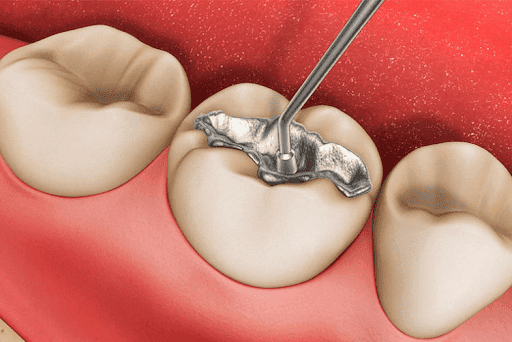
An amalgam is a mixture of mercury with other metals (silver, tin, copper, and zinc) that, once set, forms a durable restoration to seal a cavity caused by decay. Like any material, with normal use (chewing and hot drinks), it can release trace amounts of vapor from mercury.
For the vast majority of healthy individuals, these traces usually don’t pose a problem. However, there are groups that require special precautions (for example: pregnancy, breastfeeding, young children, people with kidney or neurological issues, or metal allergies). In those cases, alternatives to amalgam are generally preferred.
Key point: a single, well-made filling that’s intact and free of decay around it is not going to “poison you”. The problem arises when the restoration is leaking, broken, or painful, or when there’s a medical reason to replace it.
2. Real risks vs. common fears
For most patients: the risk is low if the amalgam is intact and the surrounding gum tissue remains healthy. It’s not advisable to remove it solely out of anxiety or after reading an alarming headline.
For high-risk groups: very young children, pregnant women or those planning pregnancy, breastfeeding mothers, patients with kidney or neurological disease, and individuals with a confirmed allergy to any component of the amalgam. In these cases, if a new filling is needed, another material is usually preferred.
Occupational risk (for the dental team): historically, those most exposed to the material were dentists and assistants, since they handled it frequently. That’s why strict handling, suction, and disposal protocols are followed today. This protects you, us, and the environment.
3. When is it not advisable to remove an amalgam?
- It’s intact (no cracks or leakage) and there’s no pain or significant sensitivity.
- There’s no decay underneath and no signs of inflammation around it.
- Your priority is not aesthetic change, and the filling isn’t visible when you smile.
- There’s no clear medical indication for replacement.
Golden rule: if it works well, don’t remove it “just in case”. Removing it without a real reason means drilling more healthy tooth structure and adding an unnecessary procedure.
4. When is it advisable to replace it?

- Marginal decay or leakage (the edges look dark, soft, or food gets “stuck”).
- Cracks or fractures in the tooth (especially when the amalgam was placed in less-than-ideal cavities).
- Discomfort when chewing, persistent pain, or sensitivity that doesn’t go away.
- Confirmed allergy to amalgam components.
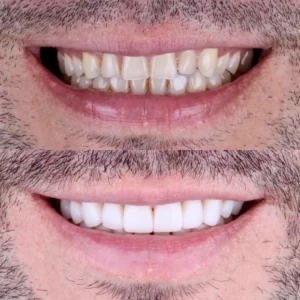
- Aesthetics: if the gray filling in a visible area bothers you.
In any of these cases, we plan the replacement and choose the most suitable material for your situation.
5. Is it dangerous to remove an amalgam?
No, not if it’s done properly. Here’s how we do it for your safety:
- Isolation of the tooth to work in a dry and controlled environment.
- High-volume suction placed very close to the tooth to capture vapors and particles.
- Continuous irrigation (plenty of water) during drilling to cool the area and wash away debris.
- Sectioning into fragments (instead of pulverizing) whenever possible, to reduce particle release.
- Handling and disposal of the removed material in accordance with environmental regulations.
- Placement of the new restoration (resin/glass ionomer/inlay) and bite adjustment.
- Written instructions for home care and a follow-up appointment if needed.
If you want to support your hygiene in the days following the procedure, here’s a clear guide to products and how to use them: Types of mouthwash and rinses.
6. Alternatives to amalgam: how do we choose the material?

Composite resin.
It’s aesthetic (tooth-colored) and adhesive: it “bonds” to the tooth, reinforcing the wall. Ideal for visible areas and small to medium cavities. It requires good technique and maintenance (polishing, checkups). To make it last longer, check out these tips: Durability of dental resin.
Glass ionomer (and variants).
Releases fluoride and has chemical adhesion. Useful for lesions near the gumline, root surfaces, or when a more conservative procedure is desired.
Inlays/onlays (ceramic or indirect composite).
Recommended when the cavity is large and greater strength and precision are desired. They protect cusps, restore anatomy, and distribute the bite more evenly.
How we decide together: the size and location of the cavity, whether it’s visible when you smile, your habits (for example, bruxism), your hygiene, saliva, diet, and budget. The goal is for the restoration to last, look good, and be easy for you to maintain.
7. Quick chart: replace or not?
| Situation in your mouth | Replace? | Reason/Notes |
|---|---|---|
| Amalgam intacta, sin dolor ni caries | No | Maintain and monitor during checkups. |
| Decay or leakage at the margin | Yes | Risk of progression; better sealing with adhesive material. |
| Crack or fracture in the tooth | Yes | Protects tooth structure and relieves symptoms. |
| Metal allergy | Yes | Choose a mercury-free alternative. |
| Pregnancy/breastfeeding (new filling needed) | Avoid amalgam | Evaluate other options and timing. |
| Aesthetic concern in a visible area | Optional | Planned replacement with realistic expectations. |
8. Checklist after removing or replacing an amalgam
- Gentle hygiene on the first day; from the second day on, brush normally around the restoration.
- Mouthwash as directed (it doesn’t replace brushing). If you’re unsure, check out: Types of mouthwash and rinses.
- Avoid biting hard foods for 24–48 hours if instructed; gradually return to your normal diet.
- If you notice persistent pain, strong sensitivity, mobility, or that your bite “doesn’t feel right,” contact us for an adjustment.
- Schedule your professional cleaning every 3–6 months to keep plaque under control and protect the margins: Professional dental cleaning.
9. Myths and facts (made clear)
“All amalgams are dangerous.”
Myth. If it’s intact and the gum is healthy, the risk to you is low. “Just in case” removals are not recommended.
“Removing it does more harm than leaving it.”
False… if protocols are followed. With isolation, suction, and irrigation, the replacement is performed safely and in a controlled manner.
“Europa la prohibió porque enferma a la gente.”
La medida europea responde sobre todo a políticas ambientales (reducir el mercurio en residuos). No significa que tus empastes actuales te hagan daño inmediato.
“If I feel fine, I don’t need a checkup.”
Myth. Major problems start as small adjustments. Preventive checkups detect leaks, high spots, or areas where plaque builds up early on.
10. Smart questions to ask at your appointment
- Is my current filling healthy, or should it be replaced? Why?
- If I replace it, which material do you recommend for my case, and how should I take care of it?
- When is my next cleaning, and what tools should I use at home?
- I’m pregnant (or planning to be): any special recommendations? Check out our guide: Dental health during pregnancy.
11. Prevention: the best way to avoid needing fillings
Amalgam exists because cavities exist. If you reduce plaque and sugar intake and attend regular checkups, you’ll need fewer fillings throughout your life. Keeping up with your daily hygiene and professional cleanings is the smartest investment for your smile.
If you already have resins, take care of them as recommended in Durability of dental resin and don’t forget your professional dental cleaning appointments.
Conclusion
- If your amalgam works well, we don’t remove it out of fear.
- If there’s decay, cracks, leakage, pain, or you want better aesthetics, we plan a safe replacement and choose the most suitable material.
- The decision is shared: your health, your goals, and the best available evidence.
Do you have specific questions or want a second opinion? Schedule your evaluation. We’d love to help you decide calmly and keep your mouth healthy, functional, and beautiful for many years.